adhatod az 1%-od!
Tereink
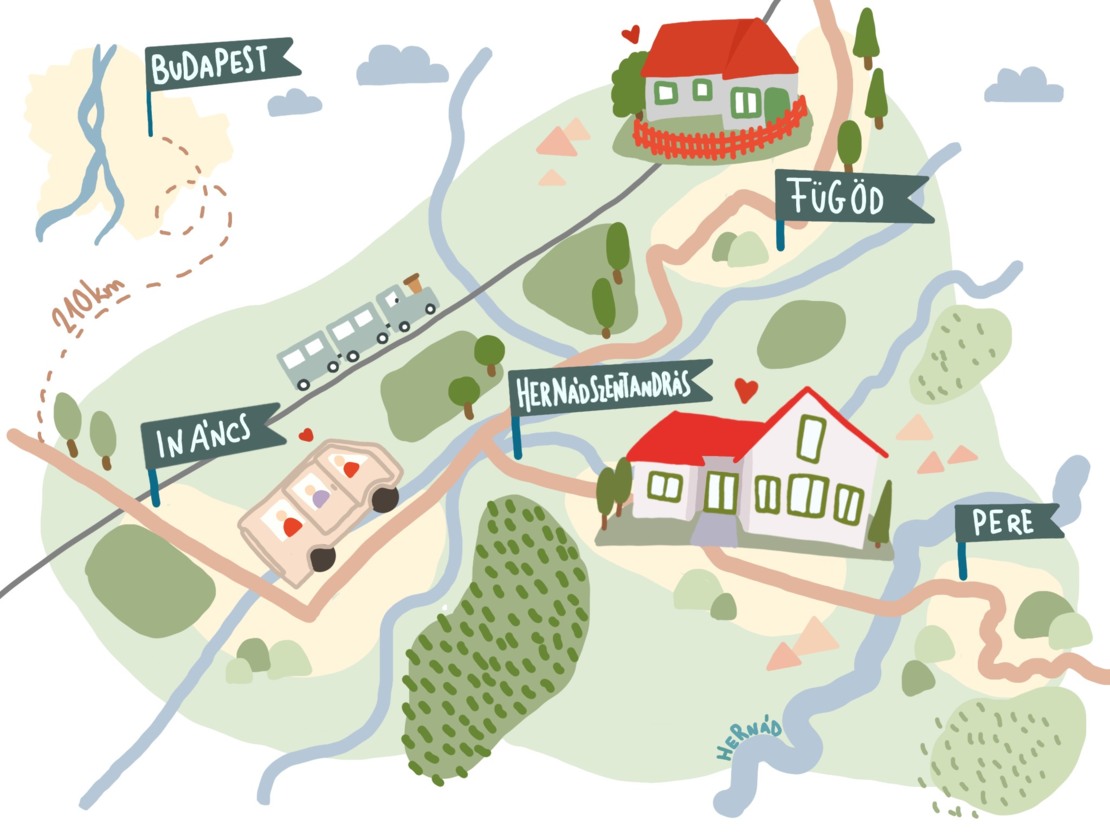

InDaHouse Önkéntes- és Gyerekközpont
2017-ben úgy döntöttünk, hogy Hernádszentandráson építünk egy saját házat és ott folytatjuk a munkát. Hosszú átmeneti időszak vette kezdetét. 2 évbe telt, mire összegyűjtöttük a pénzt és 600 önkéntes segítségével felépítettük az InDaHouse Önkéntes- és Gyerekközpontot Hernádszentandráson.
A 350 négyzetméteres, kétszintes épület földszintjén kaptak helyet a gyerekfoglalkozásokhoz szükséges helyiségek: tanoda, nyugi szoba, mozgásos szoba, nagyterem. De itt van a konyha és a vizes blokk is. Az emeleten vannak a hálószobák, ahol az önkénteseket vetett ágy várja minden pénteken. Ma már több, mint 20 önkéntes lakik, és több, mint 100 tanodás gyerek fordul meg itt egy hétvége alatt.
Fügödi Fejlesztő Ház
2020-ban nagy álom vált valóra: elkezdtük a gyerekeket segítő munkánkat Fügödön, Encs leginkább megbélyegzett cigánytelepén.
A Fügödi Fejlesztő Házunkat egy családi házban rendeztük be, amit a teleptől 1 km-re vásároltunk, és ahol két évente új, tanulásra alkalmas szobákat építünk, ugyanis a gyerekek számának növekedésével újra és újra kinőjük a házat. Ahogy nőnek a gyerekek, nemcsak iskolaelőkészítő, hanem tanodai foglalkozásokat is tartunk itt.
Appycentrum Budapest
A munkavállalóink és az önkénteseink túlnyomó többsége Budapesten él és dolgozik. Hosszú éveken keresztül tartottuk a megbeszéléseinket kávézók és kocsmák zajában. 2019 óta azonban azon szerencsés szervezetek közé tartozunk, akiknek a munkatársai az Appycentrumba járhatnak dolgozni. Ez egy olyan közösségi iroda a Nyugati téren, ami azzal a céllal jött létre, hogy ne csak ingyen irodai infrastruktúrát, hanem támogató közösséget és folyamatos fejlesztést is kapjanak a beteg és hátrányos helyzetű gyerekekkel foglalkozó civil szervezetek. A mindennapos munka mellett itt tartjuk a megbeszéléseinket, önkéntes eseményeinket is.
AdNiHouse Adománybolt
A kezdetek óta megvan a családokban az igény arra, hogy az élet minden területén adományokhoz jussanak az InDaHouse-on keresztül és felajánlások is gyakran érkeznek hozzánk. Az Egyesületünkön belül azonban nincs mód ennek a megszervezésére, több, mint 120 család számára szinte lehetetlen igazságosan adományokat osztani, ráadásul a kapacitásaink is mind a gyerekek oktatására, fejlesztésére mennek el.
Ezért úgy döntöttünk, hogy nyitunk egy adományboltot, ami önfenntartó társadalmi vállalkozásként megteremti a kereteket és a kapacitásokat is arra, hogy a helyiek nagyon alacsony áron használati tárgyakhoz jussanak. Úgy gondoljuk, hogy a kiszolgáltatottságot és tanult tehetetlenséget is csökkenti, ha nem adományokat osztunk, hanem boltban vehetik meg a szükséges dolgokat.